Fern structure
Students identify the main parts of ferns, especially the rhizome, leaves and sporangia, and can recognise them in images or diagrams.
Modern educational application for Windows 10 and 11
This methodology is part of a broader approach to teaching botany. If you are looking for a general guide, we also recommend:
👉 How to Teach Plant Identification Effectively
This methodology demonstrates how the Botanika – Green Nature application can be used to deliver a clear and structured lesson focused on ferns. The lesson connects explanation, work with visual materials, interactive elements and knowledge assessment within one environment, with emphasis on understanding fern structure, reproduction and the principle of alternation of generations.
Students identify the main parts of ferns, especially the rhizome, leaves and sporangia, and can recognise them in images or diagrams.
Students explain reproduction by spores and understand the role of the gametophyte in the fern life cycle.
Students understand the principle of alternation of generations and can describe the basic stages of the fern life cycle in their own words.
The application is used by the teacher on an interactive board or projector and the teacher leads both explanation and shared activities.
Students work independently or in pairs on their own laptops or tablets.
For most classes, a combination of both modes works best: start with a shared explanation on the board, clarify fern structure and the alternation of generations, and then move to independent student work with plant representatives, questions, tests or the botanical key.
The teacher introduces the topic, briefly explains the lesson objective and activates prior knowledge through a short guided discussion. It is useful to connect with students’ experience from nature, gardens or previous biology lessons.
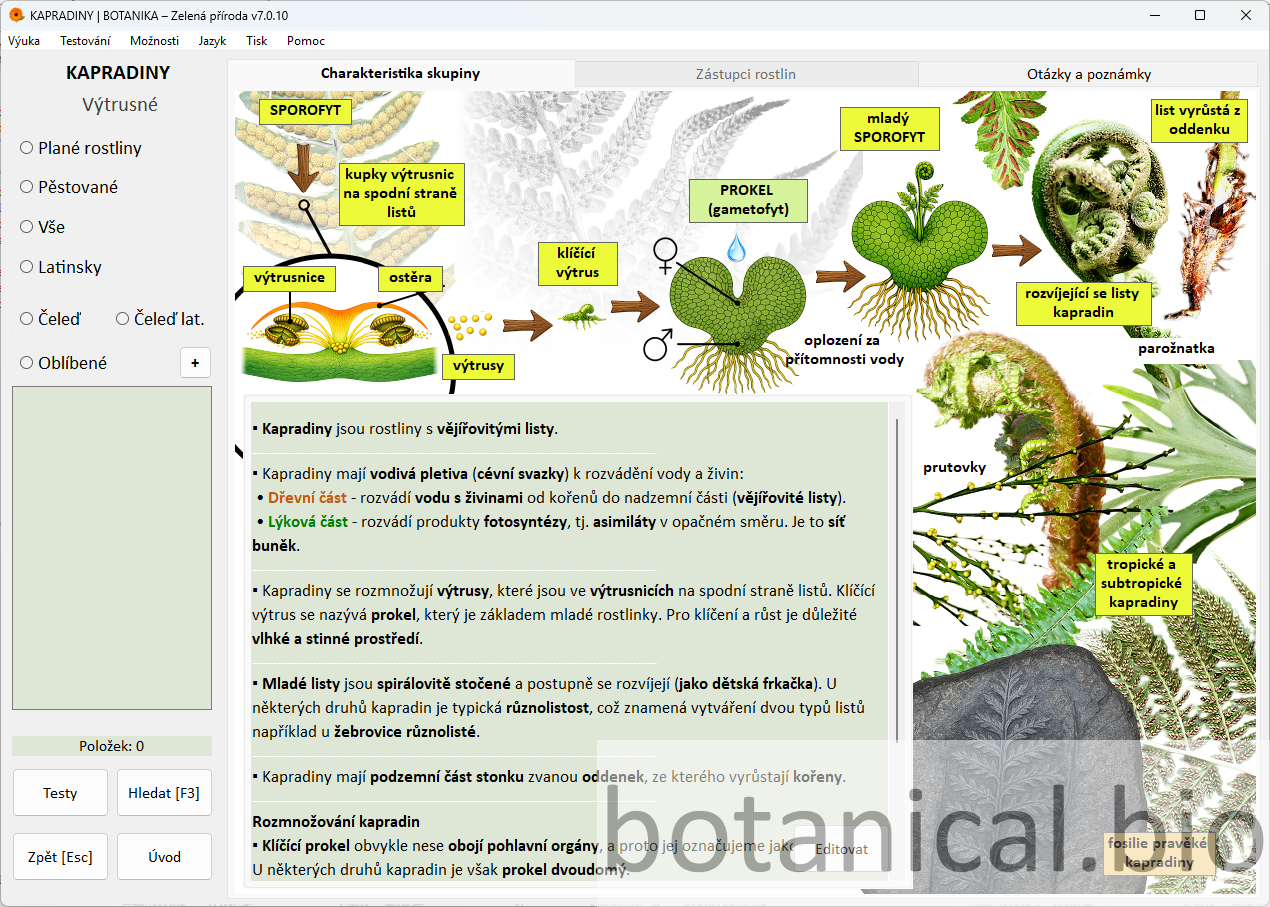
The teacher explains the main characteristics of ferns, their structure and the principle of alternation of generations. Students connect concepts with images and understand that ferns reproduce differently from seed plants.
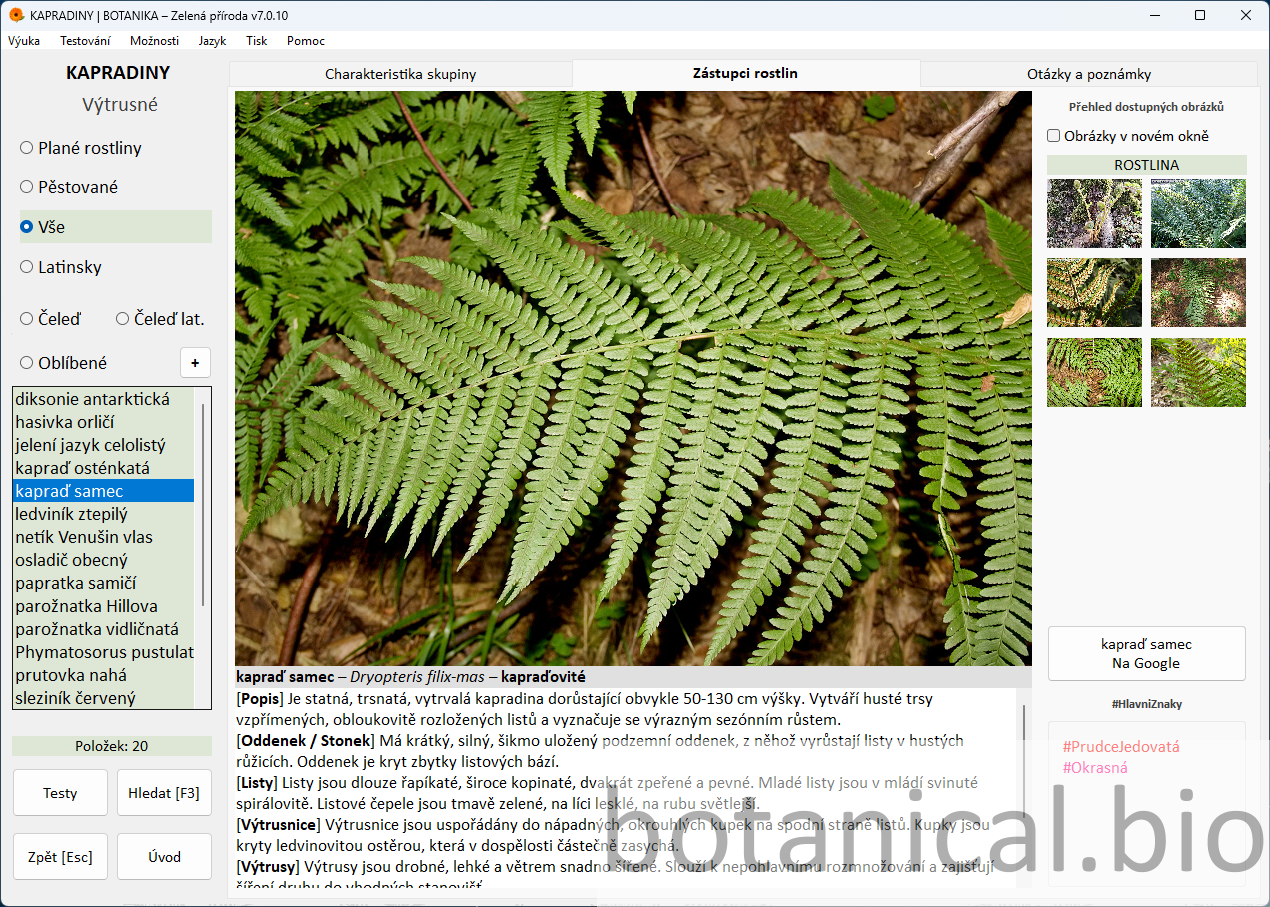
Students work with specific fern representatives and connect theoretical knowledge with observation of plant features. The teacher highlights both common traits and differences among species.
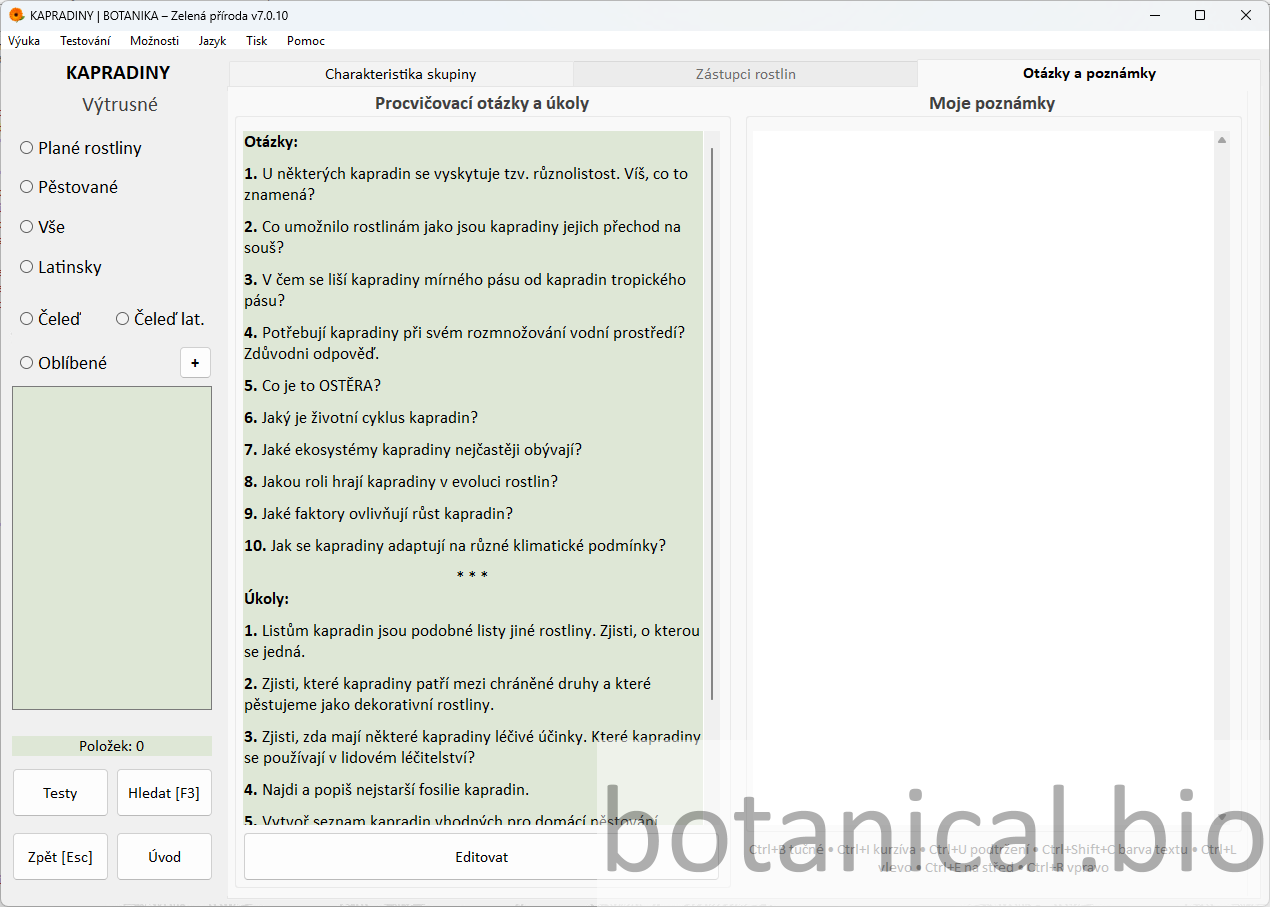
The teacher uses practice questions and tasks to verify whether students understand the key concepts and main characteristics of ferns. This part also follows naturally from the previous explanation and helps students formulate answers in their own words.
A short activating block using game elements helps reinforce plant recognition and refresh the pace of the lesson. This playful part is especially suitable after a more intensive explanation and question phase because it increases students’ attention and motivation. The memory game can be complemented by additional practice activities in the application or by a custom test prepared by the teacher or the students. The activity can be repeated with different combinations to reinforce plant recognition. The teacher can also ask students to explain which features helped them recognise the plants during the game.
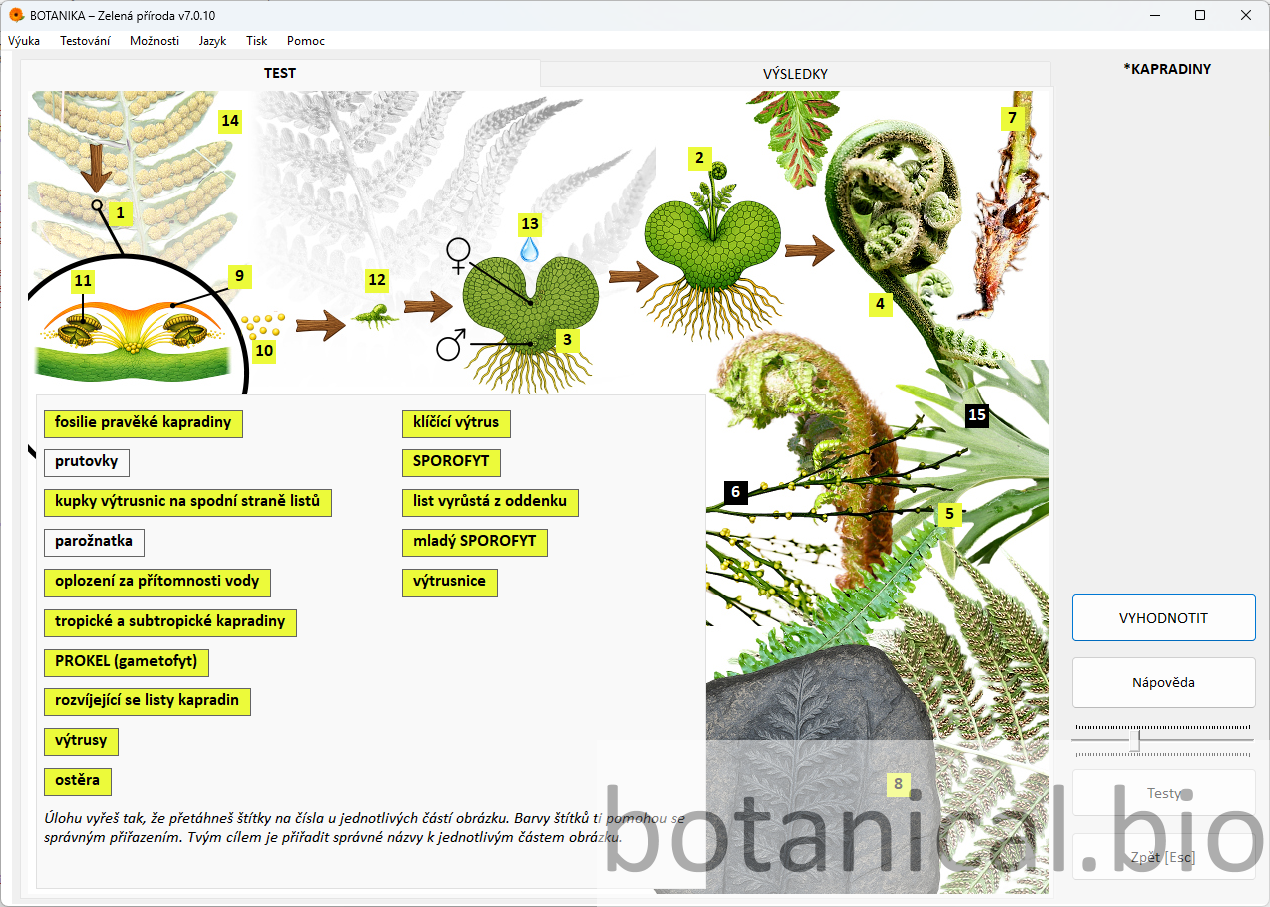
Students apply the knowledge they have gained by completing an interactive test. This part of the lesson verifies whether they understand the main features of ferns, can work with the terminology and are able to connect theoretical knowledge with visual material. While completing the test, students combine what they know about fern structure with orientation in the image and strengthen their understanding of the life cycle.
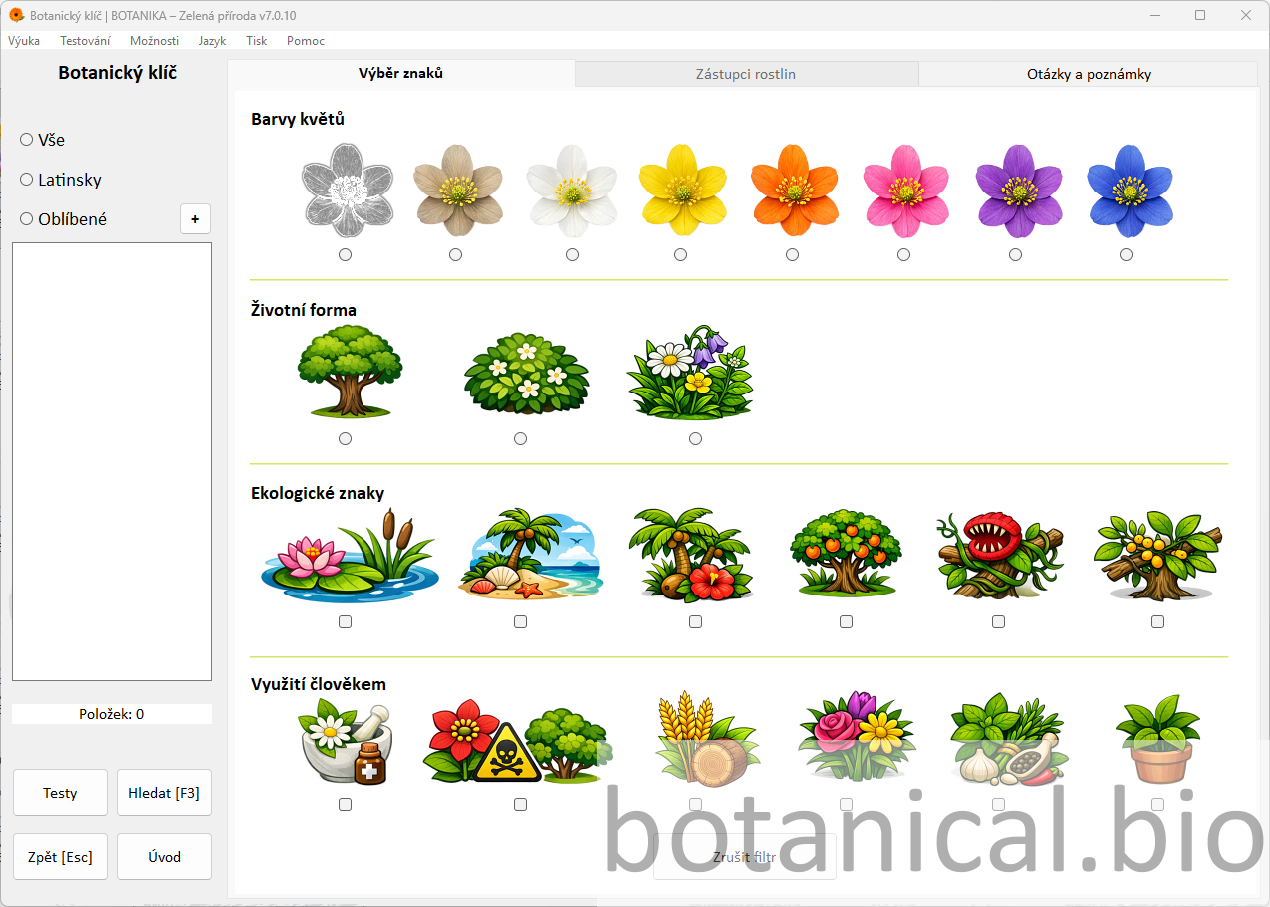
The teacher introduces the digital botanical key as a tool for identifying plants according to their features and thus extends the lesson with a practical application of the knowledge gained. This part helps show that what students learn in the lesson can be used beyond the explanation itself.
The final part of the lesson is used to summarise the main fern characteristics, revise the key terms and briefly reflect on students’ work. The teacher may also follow up with a simple homework task or a suggestion of where students can continue observing ferns in nature.
The application can be effectively supplemented with traditional explanation on the board or work with a textbook. It is recommended to explain the basic concepts first and then show them directly in the application.
If possible, enrich the lesson with real plants, a herbarium or photographs of ferns from the area around the school. This helps students connect the image in the application with real observation more easily.
Students can work in pairs or small groups and solve tasks in the application together, compare representatives or search for correct answers in the test or the botanical key.
Tests can also be used for revision or printed for work without a computer. It is also useful to remind students that the teacher can reuse the tasks when needed or supplement them with an additional worksheet.
More advanced students can search for information about ferns, their occurrence or their uses and compare it with the information in the application.
Students can use AI to explain concepts or create their own questions. The teacher guides them to verify the answers and express ideas in their own words.
The lesson can be supplemented by observing ferns around the school or by using photographs. Students compare real plants with the images in the application and try to recognise their typical features.
Atlas, theory, practice questions, tests and the botanical key can be used within one continuous lesson without switching between materials.
Visual content, questions and interactive elements keep students engaged and support active participation throughout the lesson.
The methodology can be adapted for whole-class teaching, pair work or individual practice depending on classroom equipment.
The Botanika – Green Nature application allows teachers to clearly explain even complex biological processes, actively engage students and integrate atlas, theory, practice and assessment into one environment without complicated preparation.